
Welcome back my loyal social media and brand engagement enthusiasts. It has been about a week since my last post. I know that is quite some time to leave you waiting, but what I was working on was definitely worth the wait. If you recall, my last blog post was essentially an audit comparison between Lyft and where it was found that Uber has a better interaction and connection with its followers on social media. Today I bring you something a little different. I read a research article titled “Customer Engagement in Sports and its Impact on Brand Strength and Brand Equity through Social Media,” and a few others and found a great number of connections between information explored in those articles and Uber’s brand engagement. This post will essentially tie in between the different brand engagement concepts and their correlation with Uber! So sit back and relax while I take you on this wild ride called brand engagement.
Uber’s Branding Relationship With Its Followers.
According to research explored by lead researcher Dimitrios Theocharis’ article, Customer Engagement in Sports and its Impact on Brand Strength and Brand Equity Through Social Media, “Teams and players can now directly interact with fans through a plethora of networking platforms. According to the researchers, this direct interaction with the fans will help gain maximum leverage in strengthening and building long-term relationships with fans.” Essentially a professional sports team is one giant brand. And to keep fans coming back, they need to stay actively engaged with them. This creates a bond. Every time a player interacts with a fan on social media, that is brand to customer engagement.
Now let’s look at this in terms of Uber. I have stressed time and time again about the importance of interacting with your followers. The only difference between Uber and a professional sports team like the Philadelphia Eagles is the fact that sports teams have a fan base built in (relatively speaking). Uber has to work slightly harder to get you to keep coming back. If the ride experience is poor, the driver is rude, or you get to your
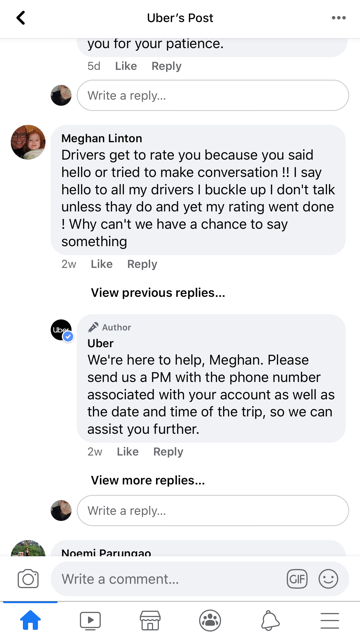
destination too late, that is all a poor representation of the brand and you may be more likely to switch from Uber to Lyft.
Let’s break it down even further. Imagine you are on Tinder, and you swipe right on a potential romantic partner and he or she swipes right on you and the two of you match! Awesome! A relationship was formed, but does that mean once you start dating them you can just stop trying? No. You have to give it your all so they keep wanting to come back.
As you can see on the audit of explained in my first blog post with you all, Uber has fantastic interaction and engagement with their followers, especially on their Twitter. So you have had a few good experiences with Uber on your morning transit to and from the 9 to 5 so you decide to follow them on twitter. From there you notice all of their tweets are just retweets from their followers which means they actually care and are watching one you tweet. Yes, they might not put as much focus into their other social platforms like Facebook or Instagram but they give it their all on twitter. After seeing all this you continue to show loyalty to Uber and you build a relationship with them. A relationship built around a brand.
The Involved Customer.
To dive deeper into the brand relationship it is important to know that not every brand relationship is going to be absolutely perfect. As with all relationships, there are complications. Another article that hits the nail on the head and is written by Christina Giakoumaki and is called “Brand engagement in self‐concept and consumer engagement in social media: The role of the source” states that “Customer engagement and the relationship between involvement, engagement, self-brand connection and brand usage intent: explains that engaged consumers will use their beliefs to develop attitudes about a brand sooner than a non- engaged consumer would.” Think of it like this, someone who does not truly care about their relationship with Uber will be less likely to go onto their Facebook or Twitter page and air a grievance. Instead, they would just write it off and just go find another ride-sharing company.
An angry involved customer on social media may seem like a PR nightmare, except it really isn’t. This means that they care about their relationship with Uber enough to voice their anger in hopes that Uber will fix it. If they customer truly did not care the amount mess ups that Uber would be allowed would be far greater than the actively engaged follower.The anger of the involved customer on social media does not necessarily mean loss of faith in the brand, but rather trust issues that need to be worked through, which like stated previously is required in every relationship. It is how the brand handles the engagement that determines their perception of the relationship.
Perception Through Customer Generated Content.
As we all know, for every brand there are at least 100 different ways for them to entice you to their brand. This includes brand loyalty programs (like Uber Rewards), testimonials, ads, and several other brand engagement efforts. However in another article called “Customer engagement and the relationship between involvement, engagement, self-brand connection and brand usage intent” written by lead researcher Paul Harrigana, explains that “Consumers not only consume brand‐generated content, but also create and share their own brand‐related content on social media, which has also the potential to shape brand perceptions and behaviors.”
Just to clarify Customer generated content about a brand is just another form of brand engagement. We call this C2B (customer to brand). Other variations include B2B (brand to brand) and B2C (brand to customer). If a customer creates their own kind of brand related content like a vlog update or a Twitter post and many people see it because it is specifically good, people can create a positive perception of the brand, even if they have not used it yet, they still have a positive perception of it. In the case of Uber, I think the best example of this is Twitter. A customer could have had a funny experience during a ride like their Uber driver rapping and because of that they tweet about it and mention Uber in the tweet. Uber sees this and retweets it.
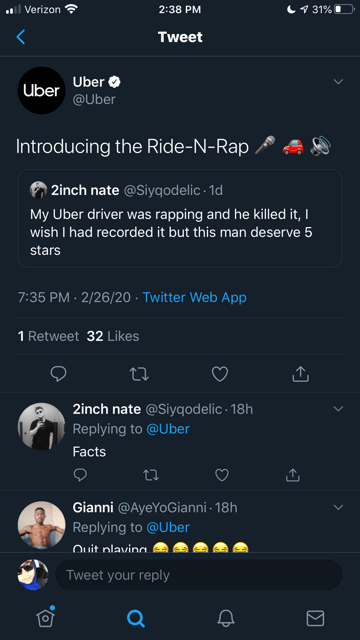
Now it goes out to all of their followers and will pop up when you search for Uber on Twitter. More people see this and develop the connotation that Uber has a sense of humor and they begin to follow them and may even download the app. That small piece of customer to brand engagement may now have created 100 possible new relationships with the brand.
Brand Engagement: A Big Deal.
When it comes down to it, the engagement a brand has with its followers is crucial to maintaining and building new relationships. If a big name player like Lebron James does a quick engagement with you on Twitter, that’s a big deal and more than likely will have you keep coming back. If Uber responds to your grievance on social media, reposts a funny tweet about them, and acknowledges your customer to brand engagement with them it is also a big deal. Why? Because it shows that they care and want your continued business. Now since I’ve done my part I want you all to do me a favor…if you’re up to it. As you’ve read about the different types of brand engagement explored through Uber, I want you to tell me in the comments below what makes for good brand engagement and if you have any relationships with brands simply because of the engagement methods they use! As always thank you for reading and stay tuned for the next one!
 Brandon's Social Experience